BRI — Rekening Koran (Account Statement)
Backend for Bank BRI's Account Statement platform — CASA, Top 5, and Loan modules across many services, plus a reusable shared library.
About This Project
The Problem
How We Solved It
How It Works
- 1
Request and validation
Each module (CASA, Top 5, Loan) is a Go service built on Gin that receives a statement request with an account number and, where relevant, a date range or transaction type. Middleware enforces channel headers and authentication, then the handler validates the payload: date format and order, no future dates, and account number length.
- 2
Input preparation
The use case layer normalizes the input, converting dates into the Julian format used by the core banking data and clamping the end date to today. It also loads lookup context such as status mappings and remark rules.
- 3
Date-aware query across stores
The repository picks which data sources to read based on the requested range: today only, history only, or history plus today. Transaction data comes from HBase, while reference and enrichment data live in relational databases (MySQL, SQL Server), with queries tuned so large statements stay fast.
- 4
Enrichment and remark mapping
Raw transactions are enriched in bulk with reference data such as merchant, bank, ATM and corporate names, and regex-based rules turn raw transaction codes into readable remarks. Rules and channel mappings are cached in Redis to avoid repeated database lookups.
- 5
Balance calculation and response
The service computes the opening balance, applies each transaction to derive running balances, and appends the closing balance before returning a standardized JSON response. Top 5 returns the largest transactions for the account and transaction type, with the same remark enrichment.
- 6
Shared library across services
Common building blocks live in a shared Go library reused by the statement services: database and Redis connection setup, Julian date conversion, remark rule loading and parsing, channel mapping, enrichment repositories, and APM tracing helpers. Each service pins a versioned release of the library.
- 7
CI/CD with Jenkins and Bitbucket
Every service calls a shared Jenkins pipeline from Bitbucket that can run unit tests, SonarQube and SAST scans, builds and pushes a Docker image, and deploys it to Kubernetes with Helm using per-environment values files.
Key Capabilities
CASA Module
Top 5 Module
Loan Module
Shared Library
Query Optimization
Under the Hood
Impact & Outcomes
Delivered backend business logic for core Account Statement modules
Built a shared library reused by multiple teams, improving consistency and efficiency
Optimized queries for performance over large banking datasets
What I Learned
Other Projects
BRI — Microservices Migration (300+)
Led a zero-downtime migration of 300+ Enterprise Data Management microservices to production and development with Helm and Kubernetes.
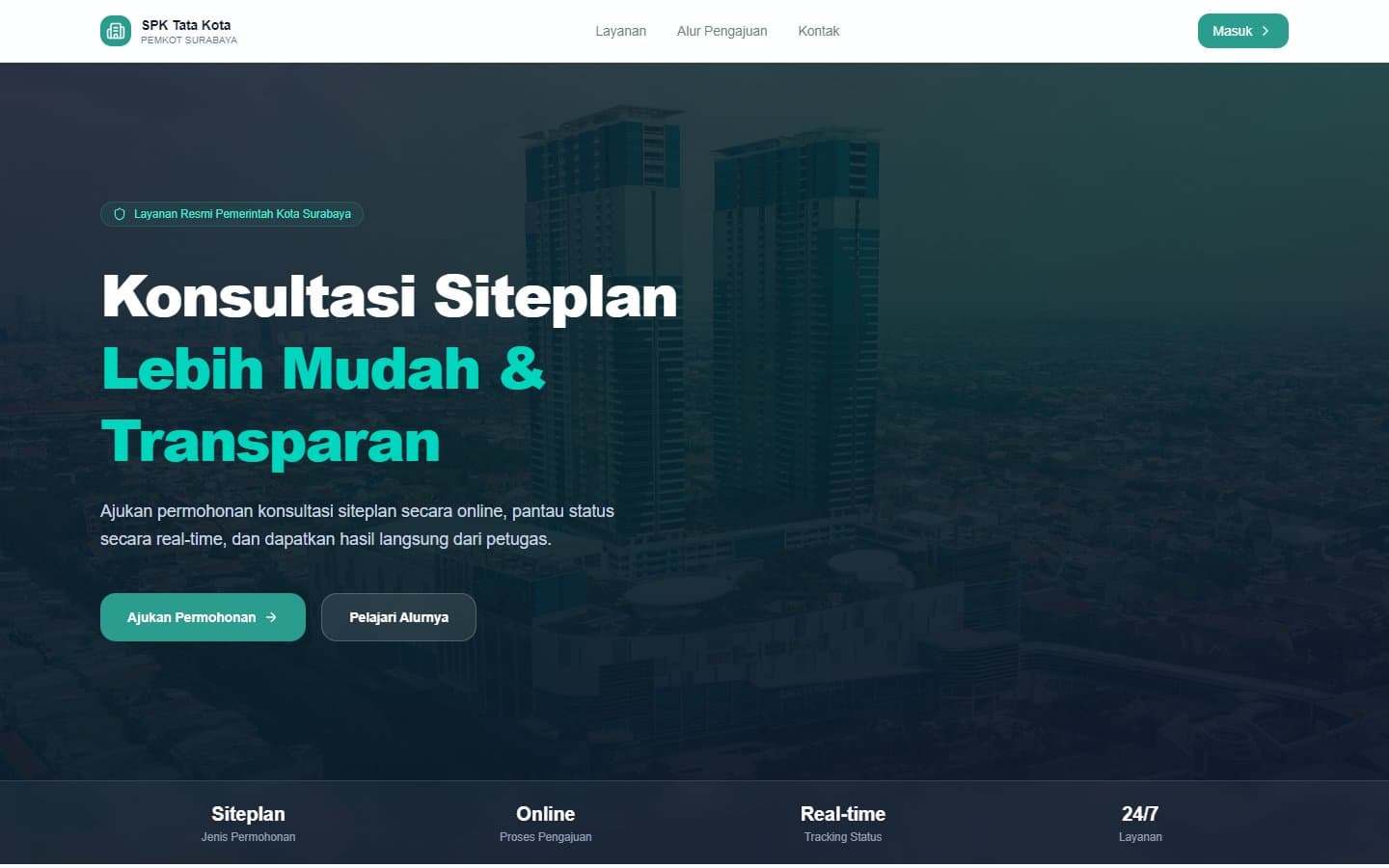
Pemkot Surabaya — SPK Permohonan Siteplan Tata Kota
A site plan consultation and permit-processing system for the City of Surabaya, with role-based task assignment, field assistance scheduling and a citizen helpdesk.